

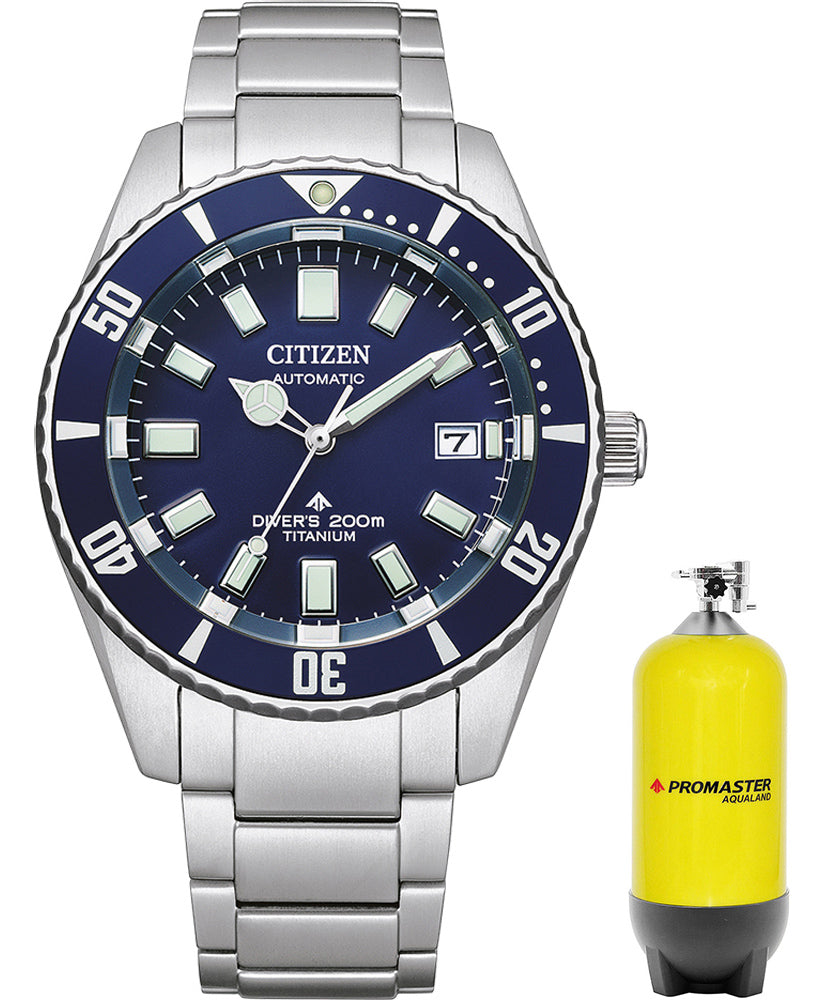
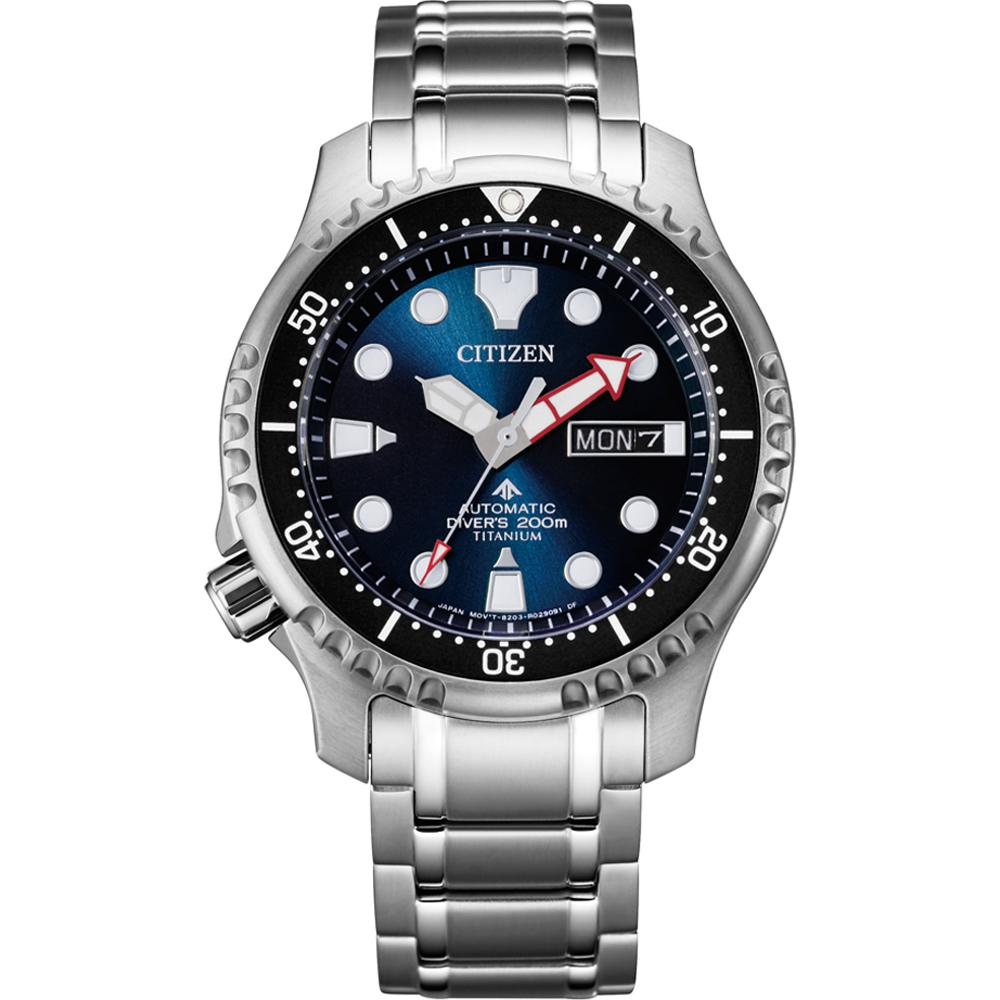

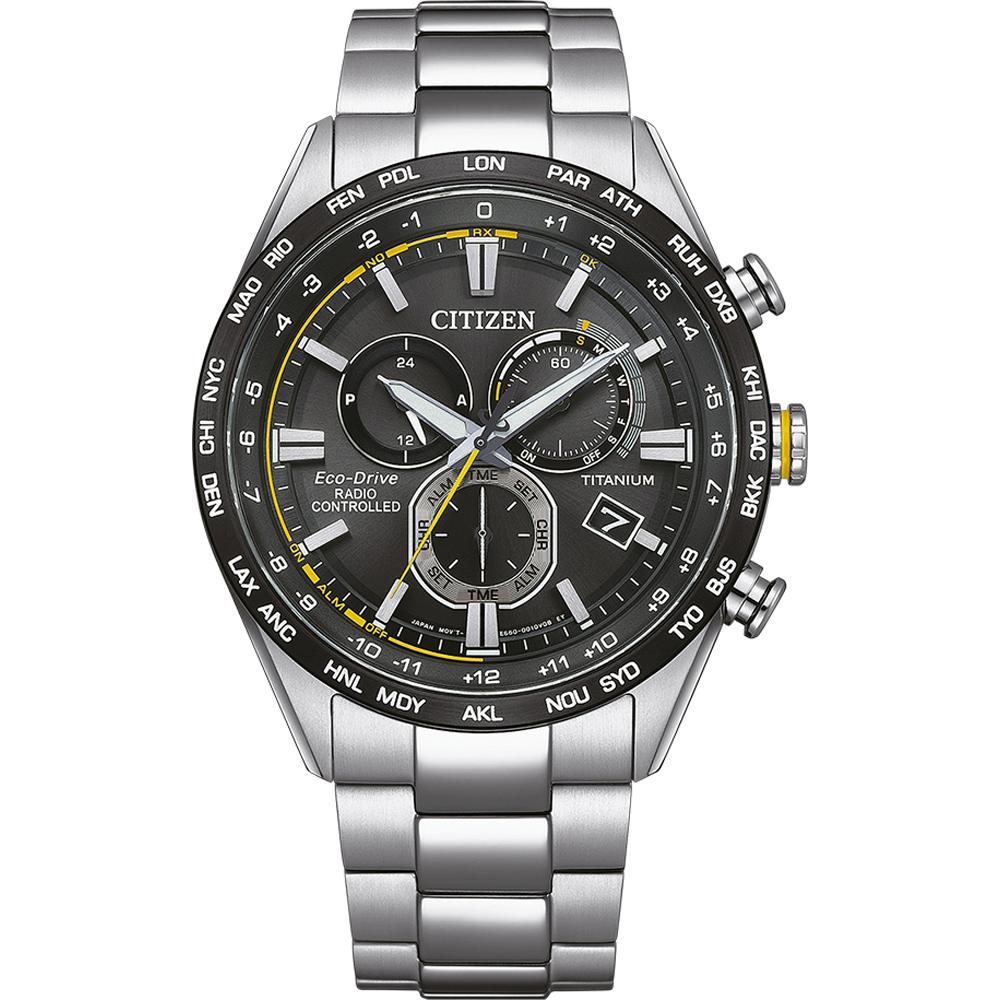
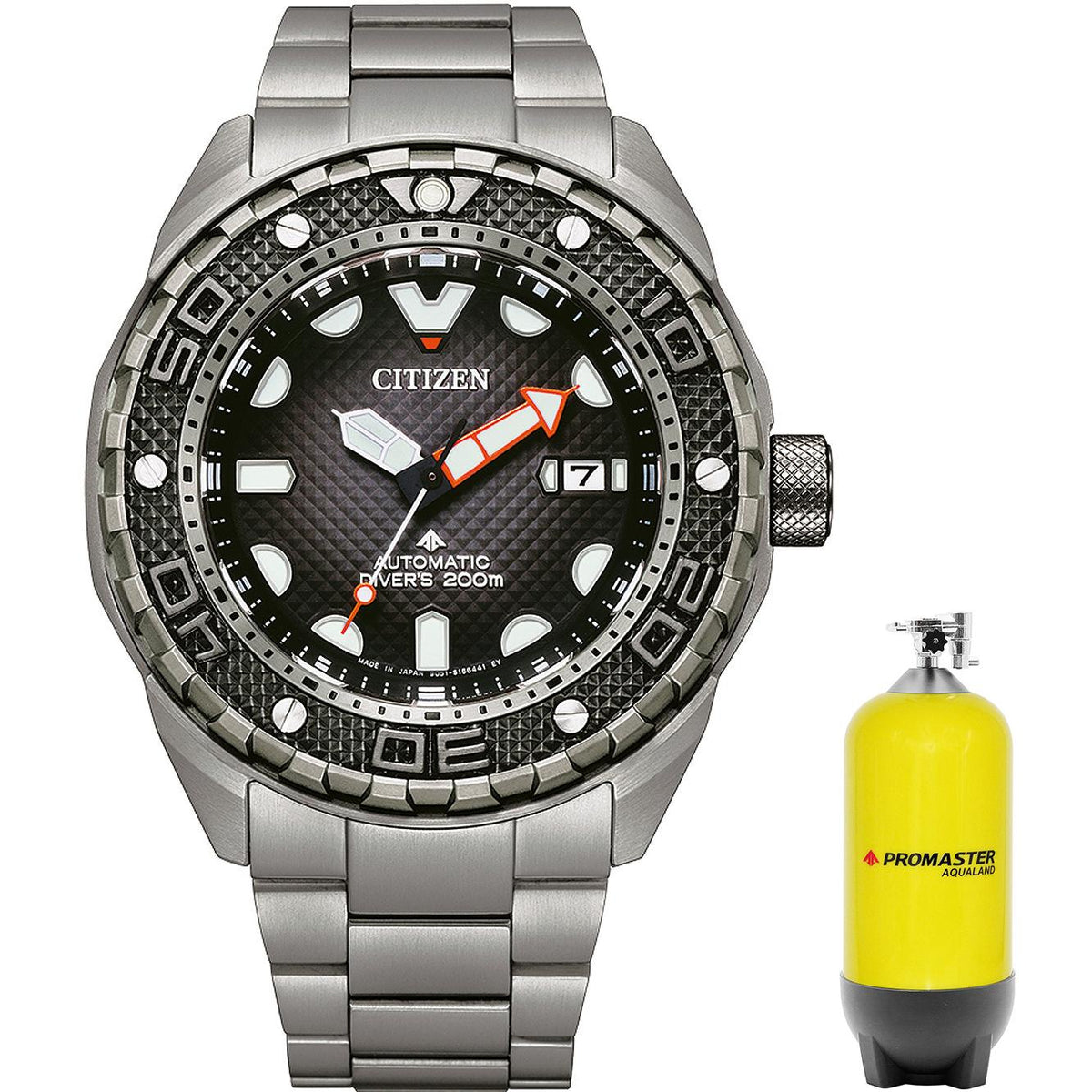
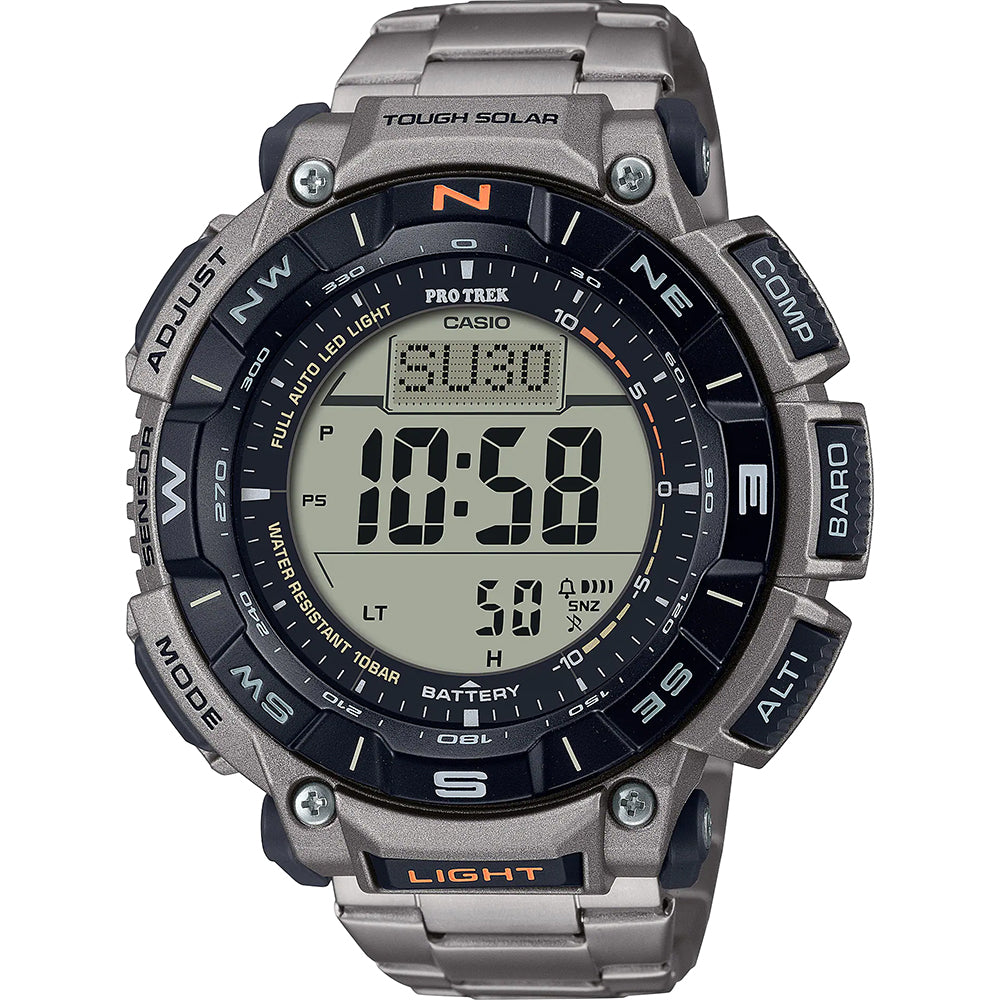
Casio Digital 'Pro-trek' Men's Watch PRG-340T-7ER
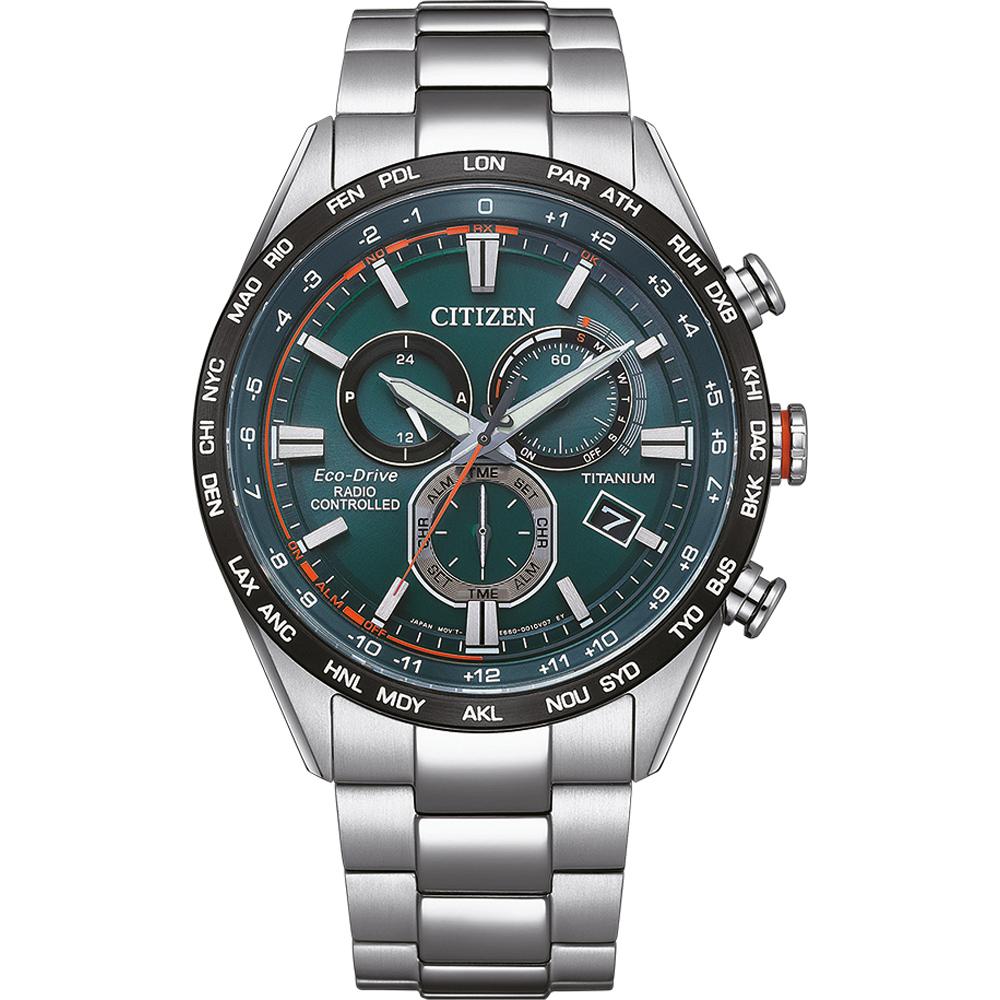
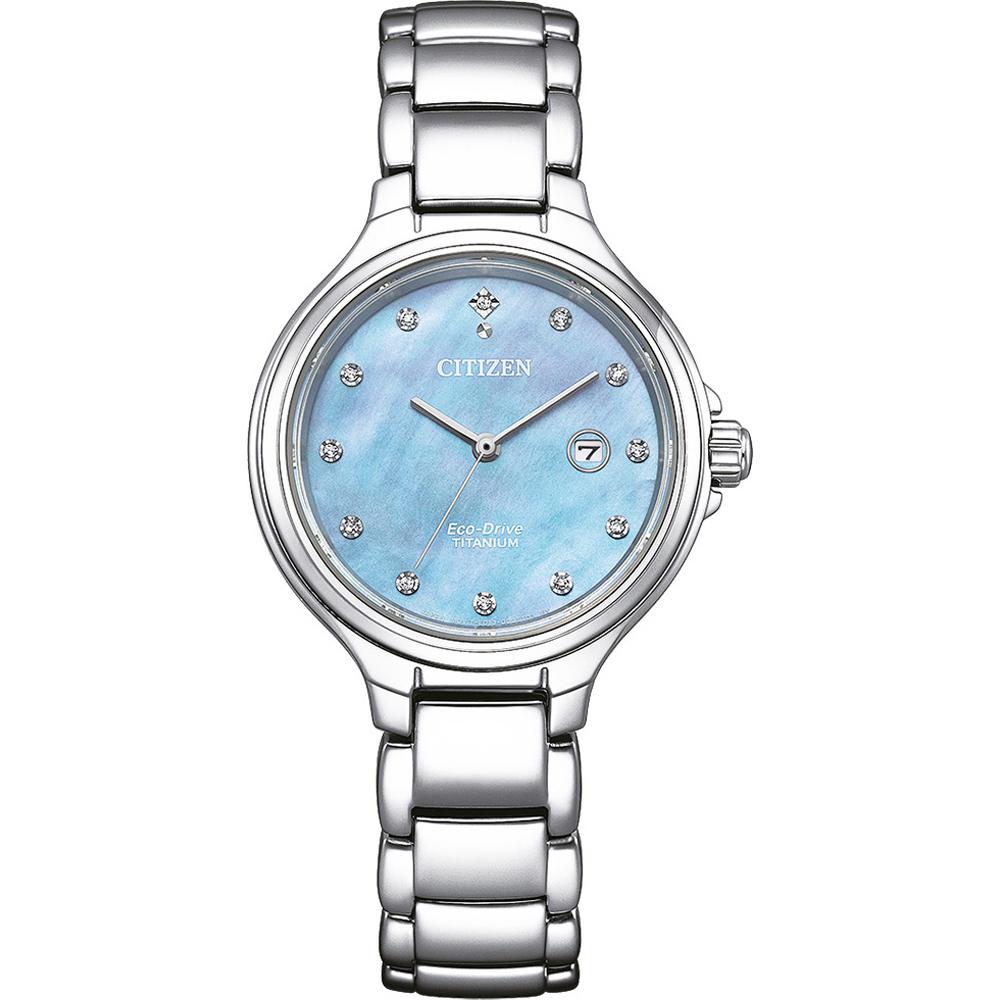
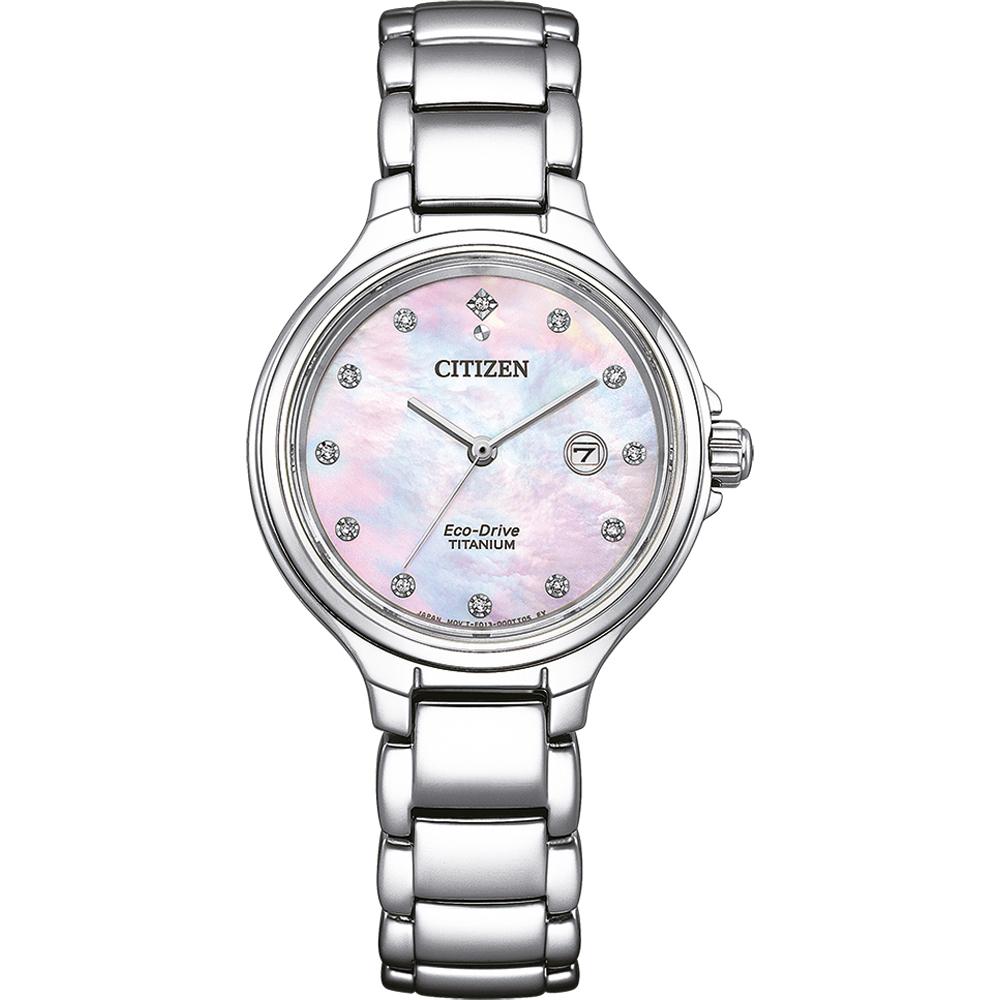
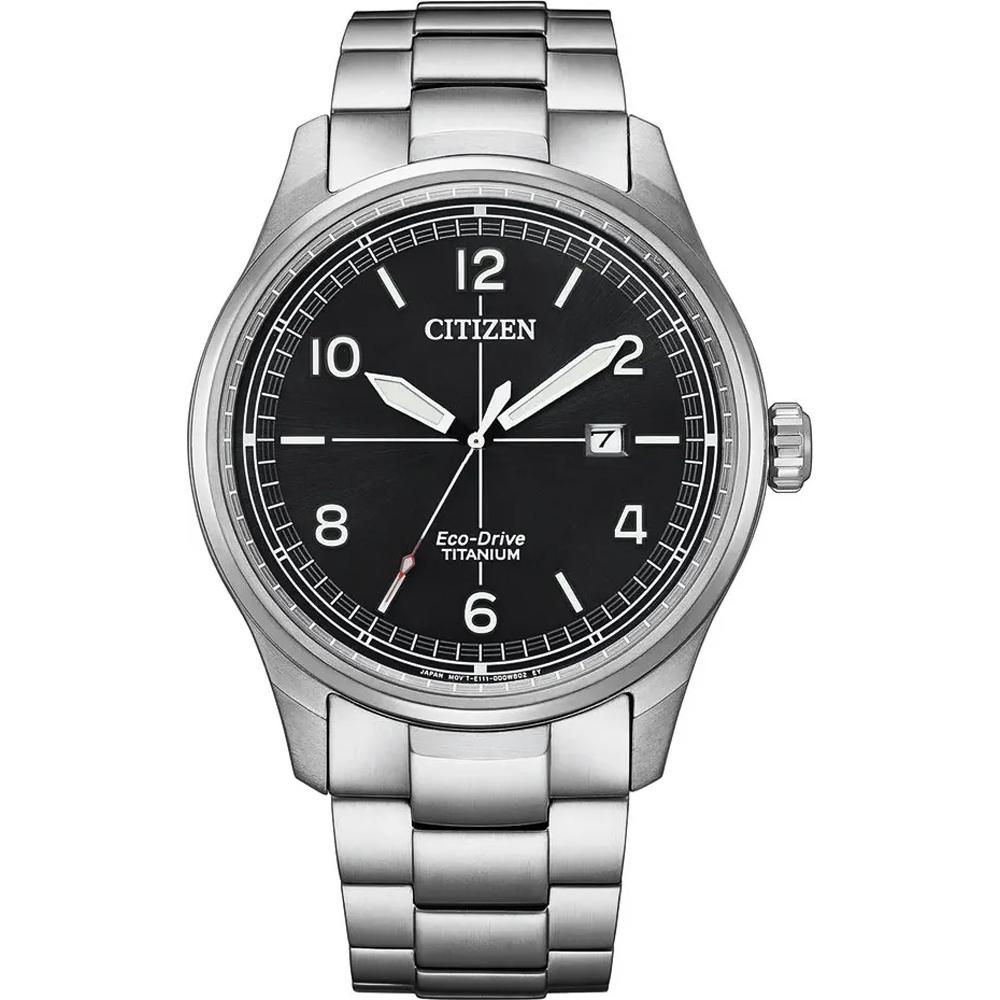
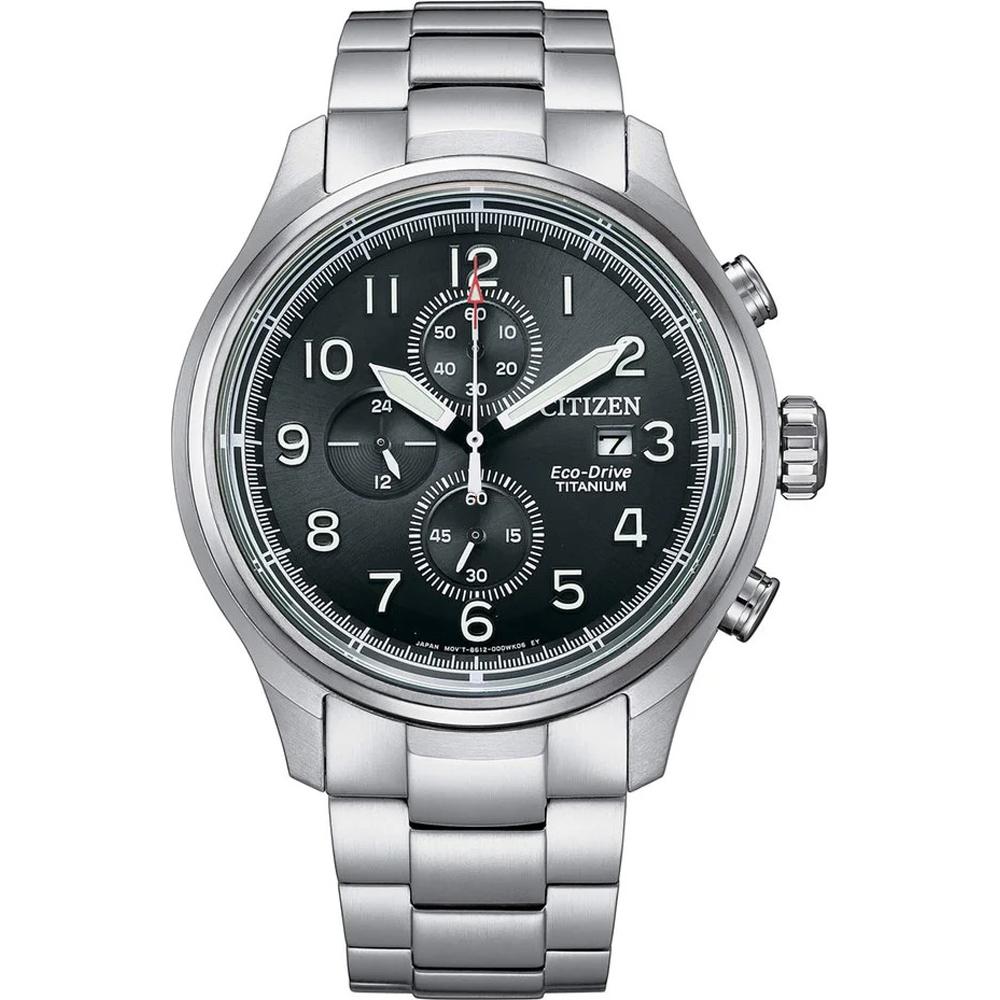
Titanium watches sit at the intersection of engineering and wearability: the metal is roughly 45% lighter than stainless steel yet comparable in strength, which makes it one of the most practical case and bracelet materials available. With 27 pieces in this category, the selection covers a focused range of watches built around that core advantage.
What titanium actually means on your wrist
Grade 2 and Grade 5 (aerospace-grade) titanium are the two grades most commonly used in watchmaking. Grade 5 — an alloy with aluminium and vanadium — is harder and more scratch-resistant, making it the preferred choice for tool and sport watches. Both grades are hypoallergenic, which matters for wearers who react to the nickel content found in many stainless steel cases. The metal also develops a natural patina over time rather than deep scratches, as the surface oxide layer re-forms after abrasion.
In terms of finish, titanium takes both brushed and polished treatments well, though polished titanium shows contact marks more readily than brushed. Most sport-oriented models favour an all-brushed finish for this reason.
Choosing a titanium watch by intended use
The weight reduction is most noticeable on larger cases — anything above 42 mm in diameter or with an integrated bracelet will feel significantly lighter in titanium than in steel. This makes the material a natural fit for men's watches in the sport, outdoor, and everyday-wear segments, where a heavy bracelet becomes fatiguing over a long day. For dress contexts, titanium's grey-toned, slightly matte appearance reads as understated rather than formal, so it pairs better with casual or business-casual attire than with black-tie occasions.
Water resistance is determined by the case construction and crown sealing, not the case material itself — but titanium's corrosion resistance in saltwater makes it a better long-term choice than steel for diving or coastal use. Pair it with a rubber strap for maximum water and sweat resistance, or keep the integrated titanium bracelet if comfort and weight are the priority.
Titanium versus other band materials
Compared with leather or fabric straps, a titanium bracelet adds structural rigidity and longevity — it will not degrade with moisture or UV exposure. Against stainless steel bracelets, the trade-off is cost: titanium is more expensive to machine, so watches at a given price point may have thinner cases or fewer finishing details. The payoff is a bracelet you will barely notice on the wrist, even after twelve hours of wear.
Our Titanium range
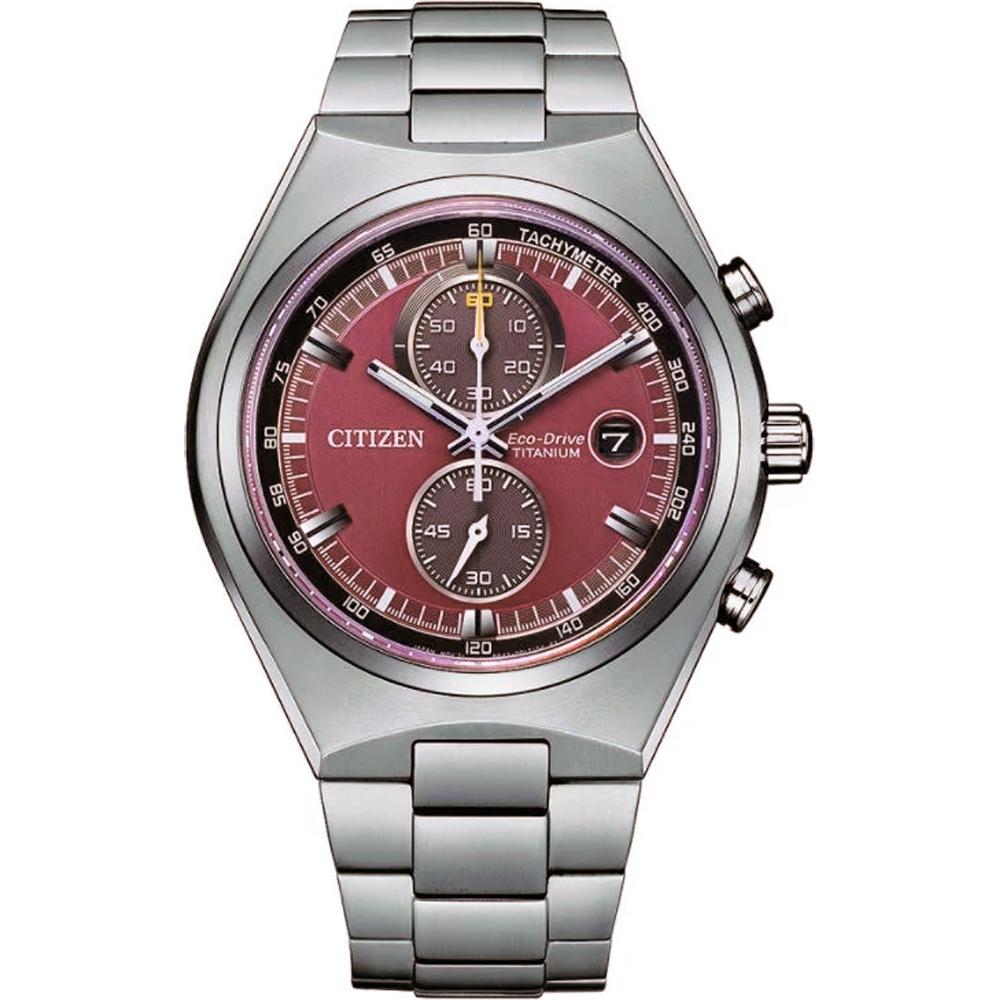
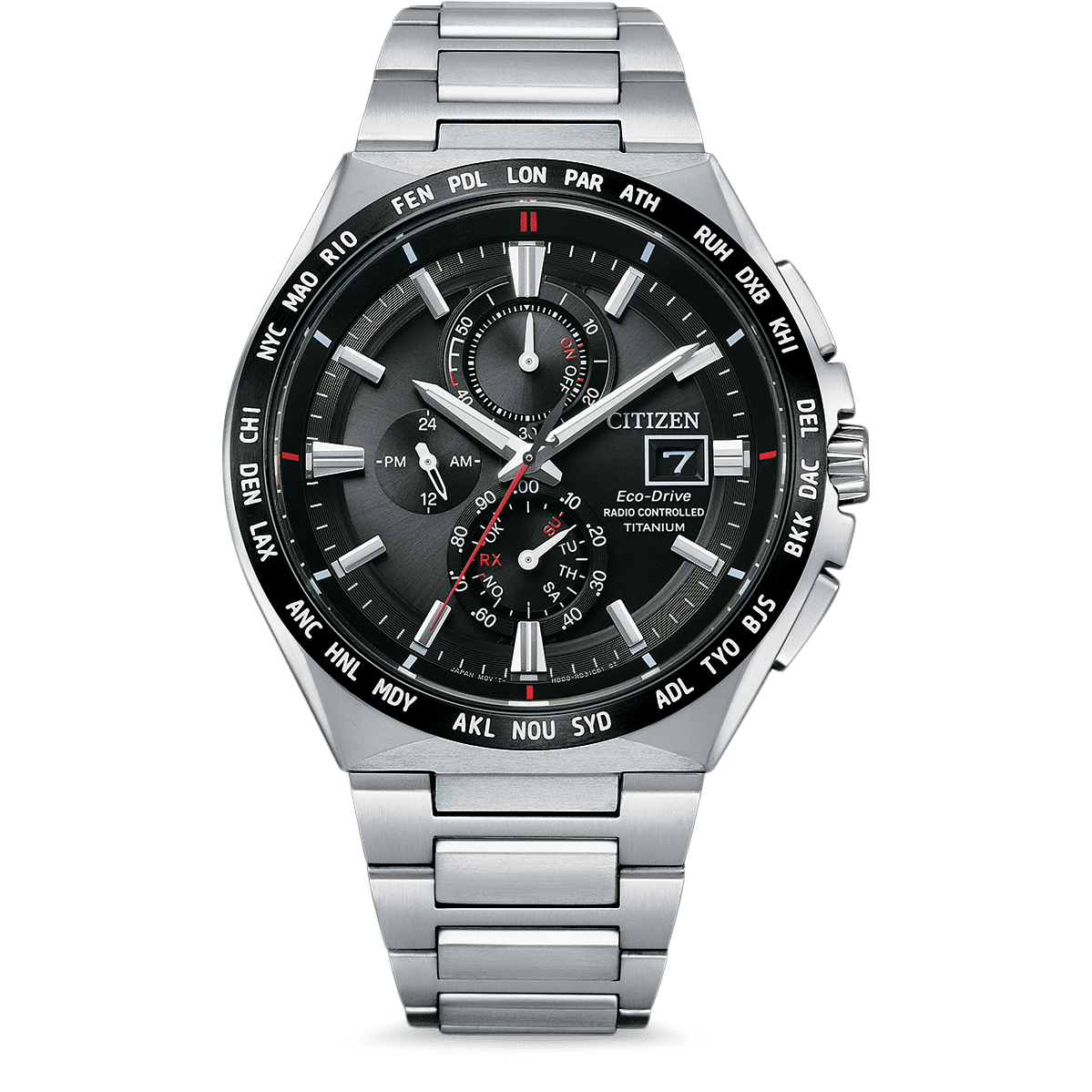
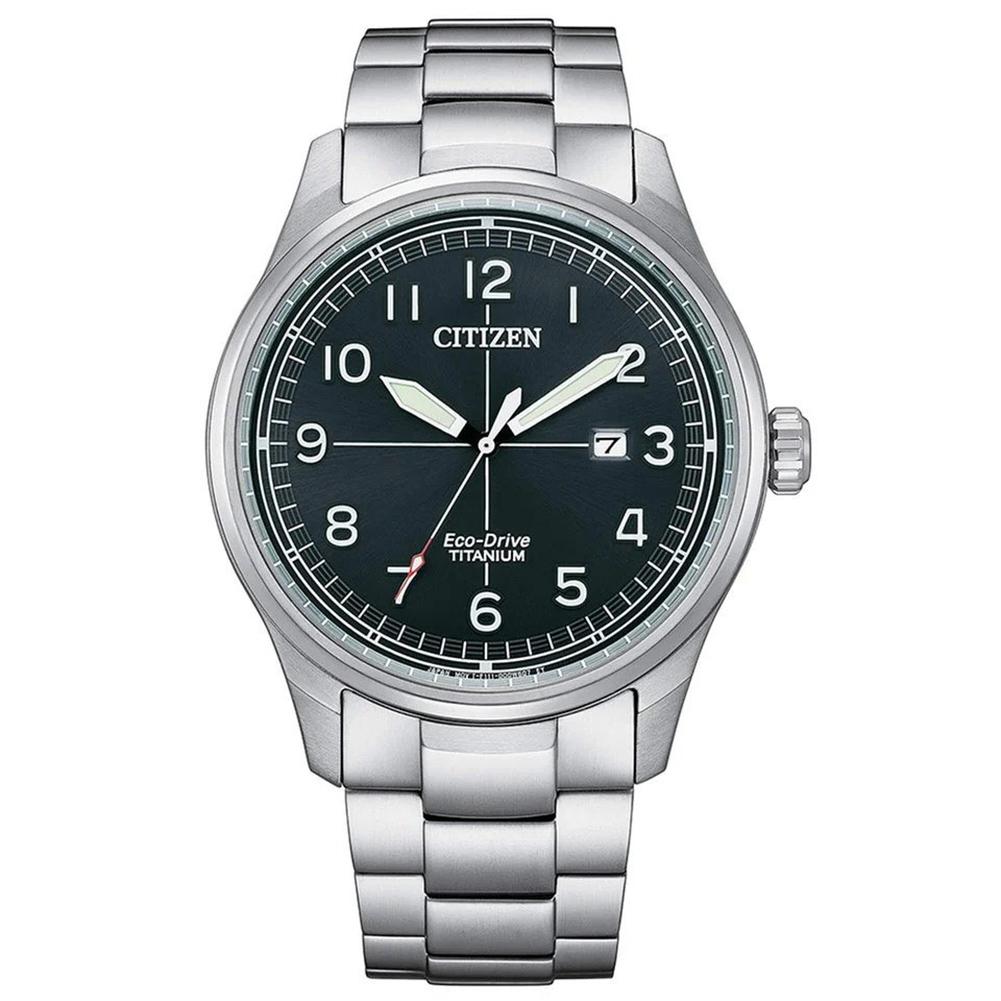
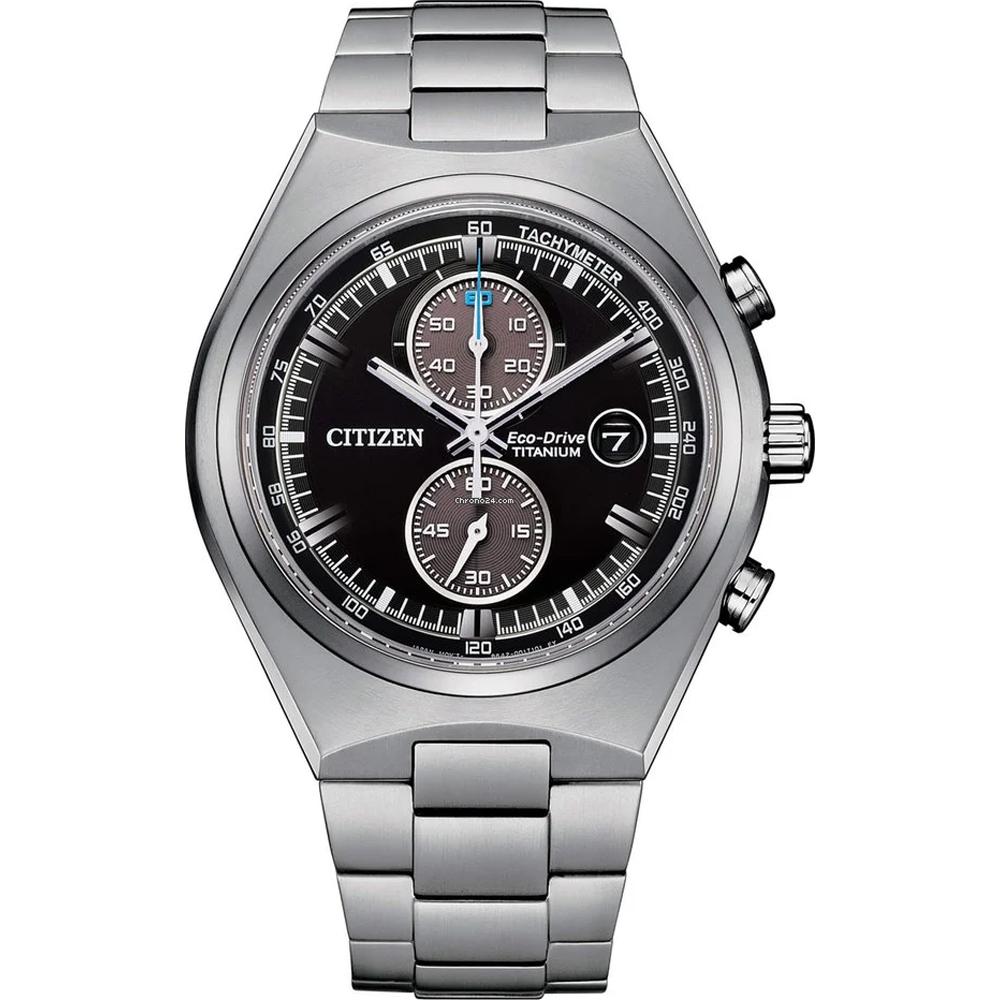
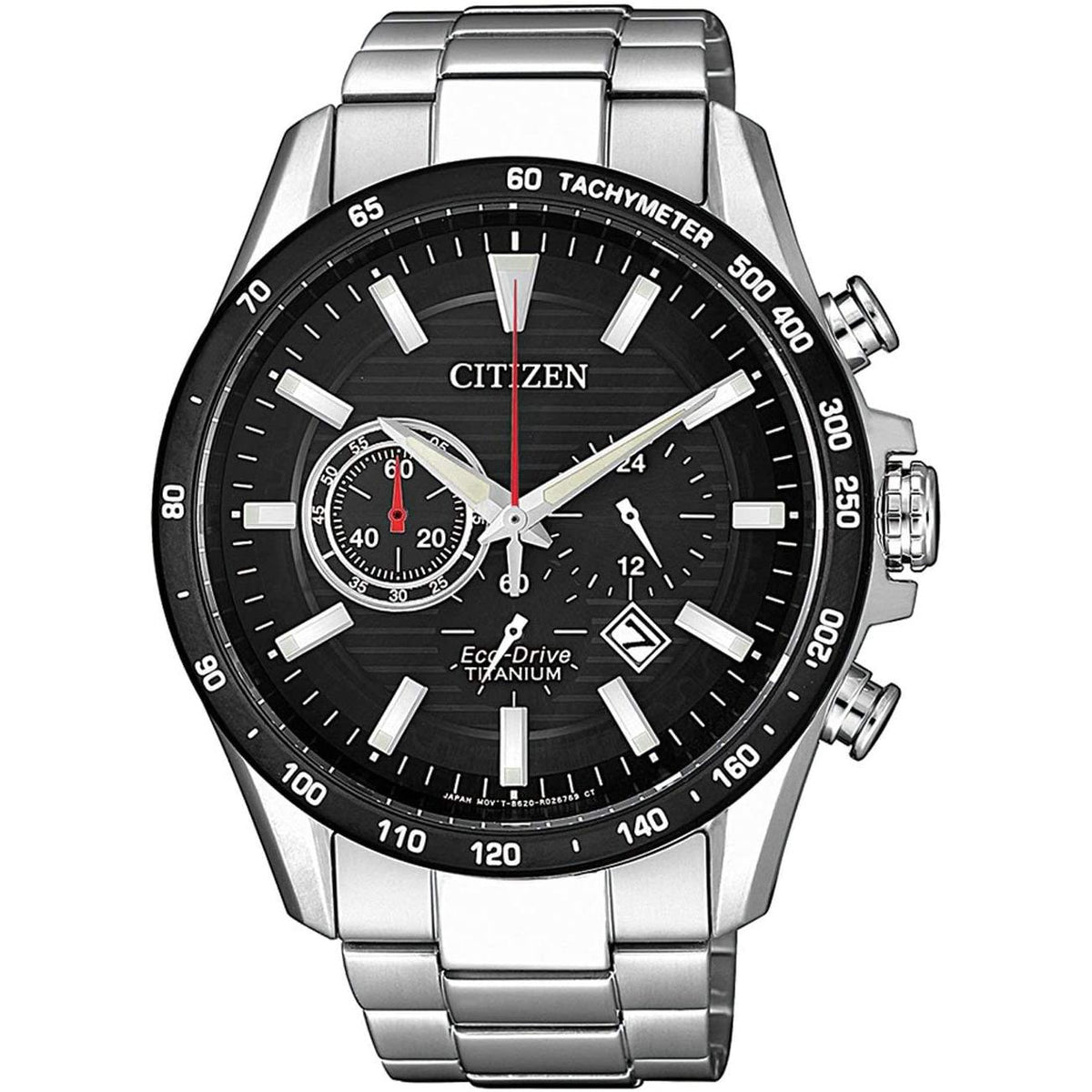
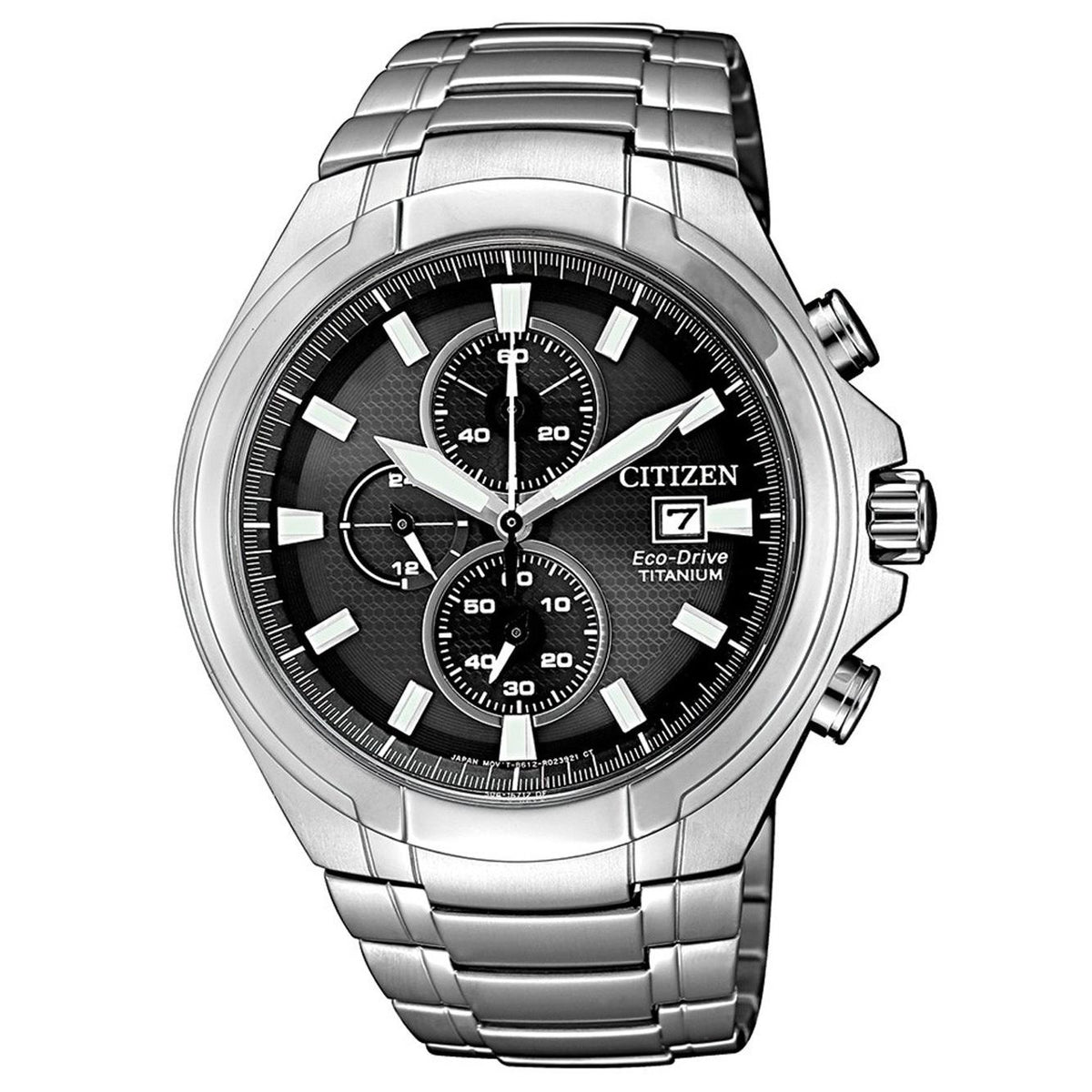
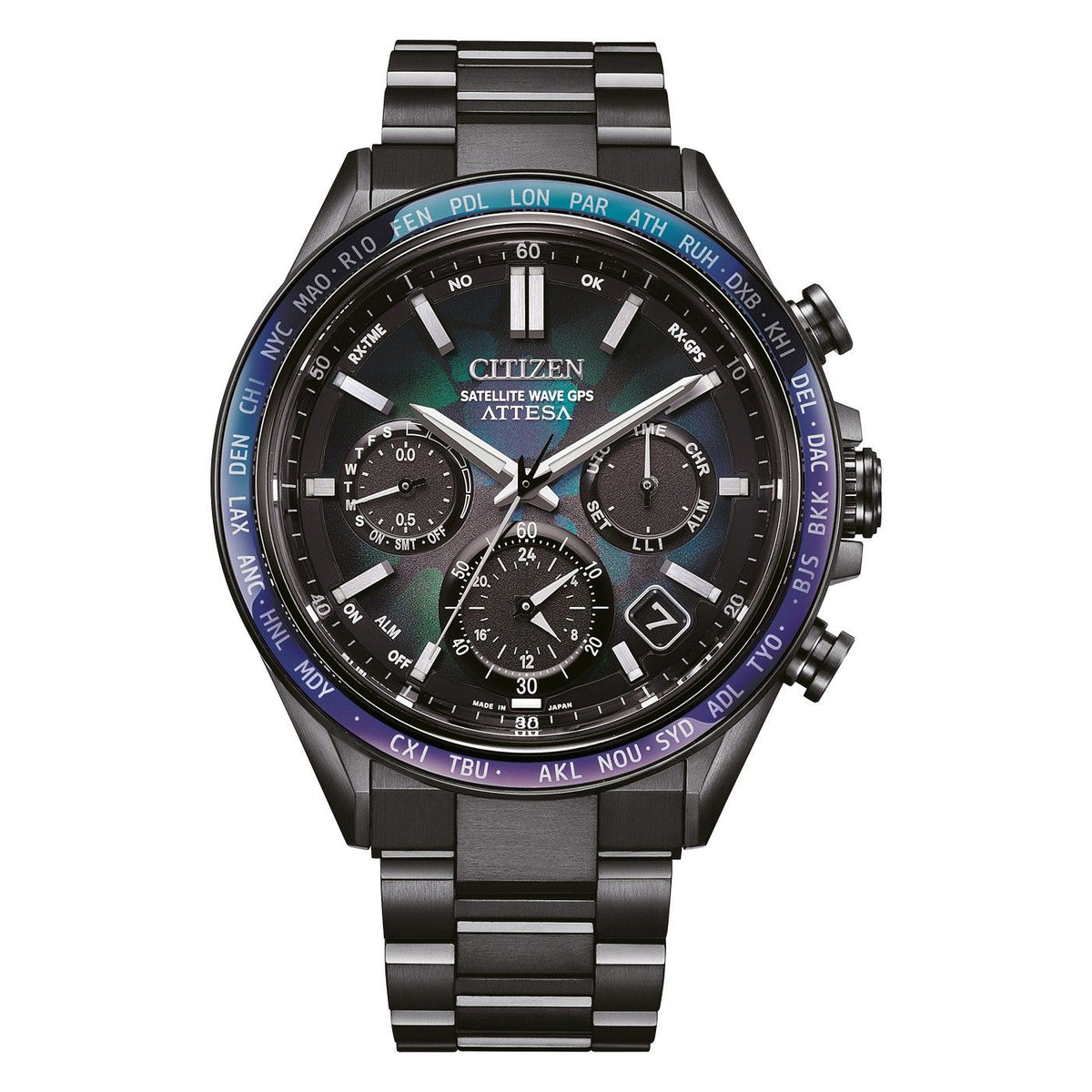
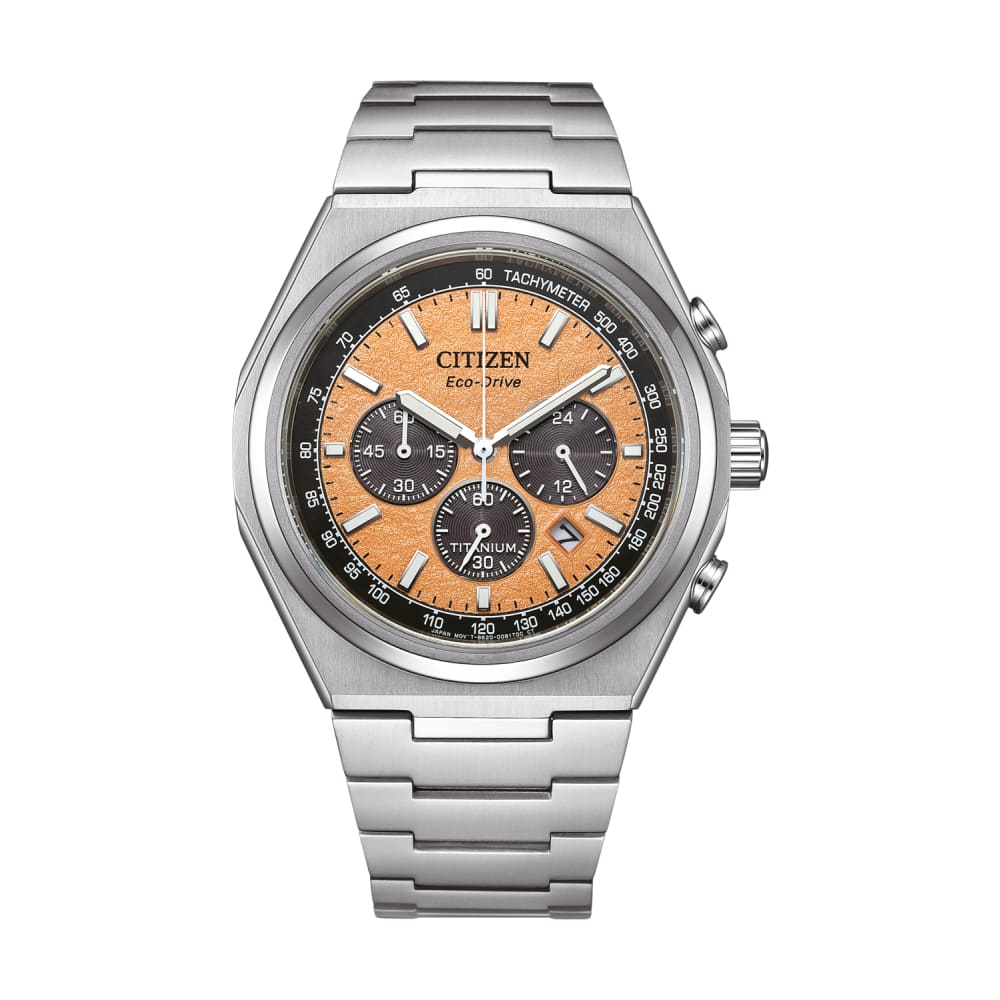
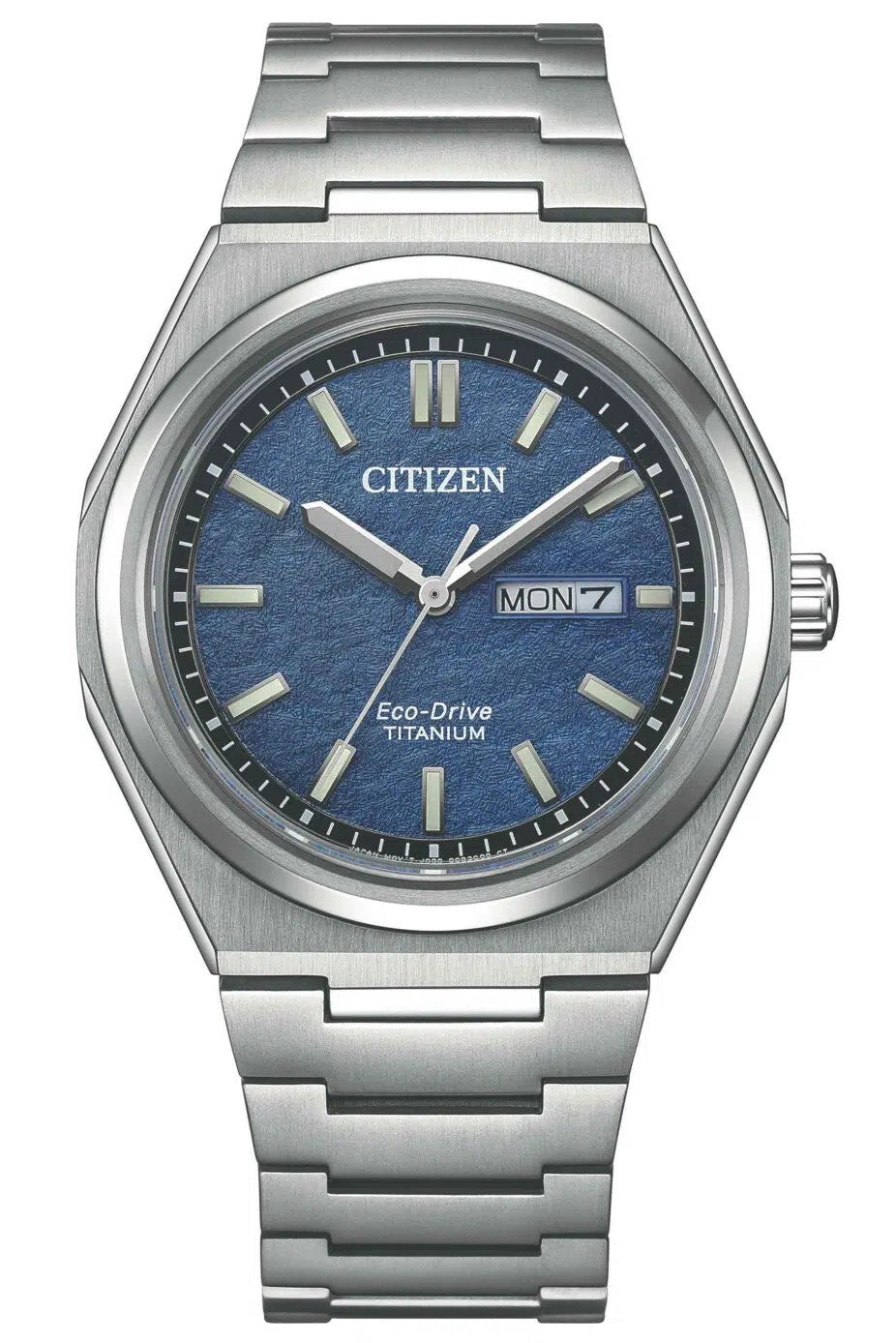
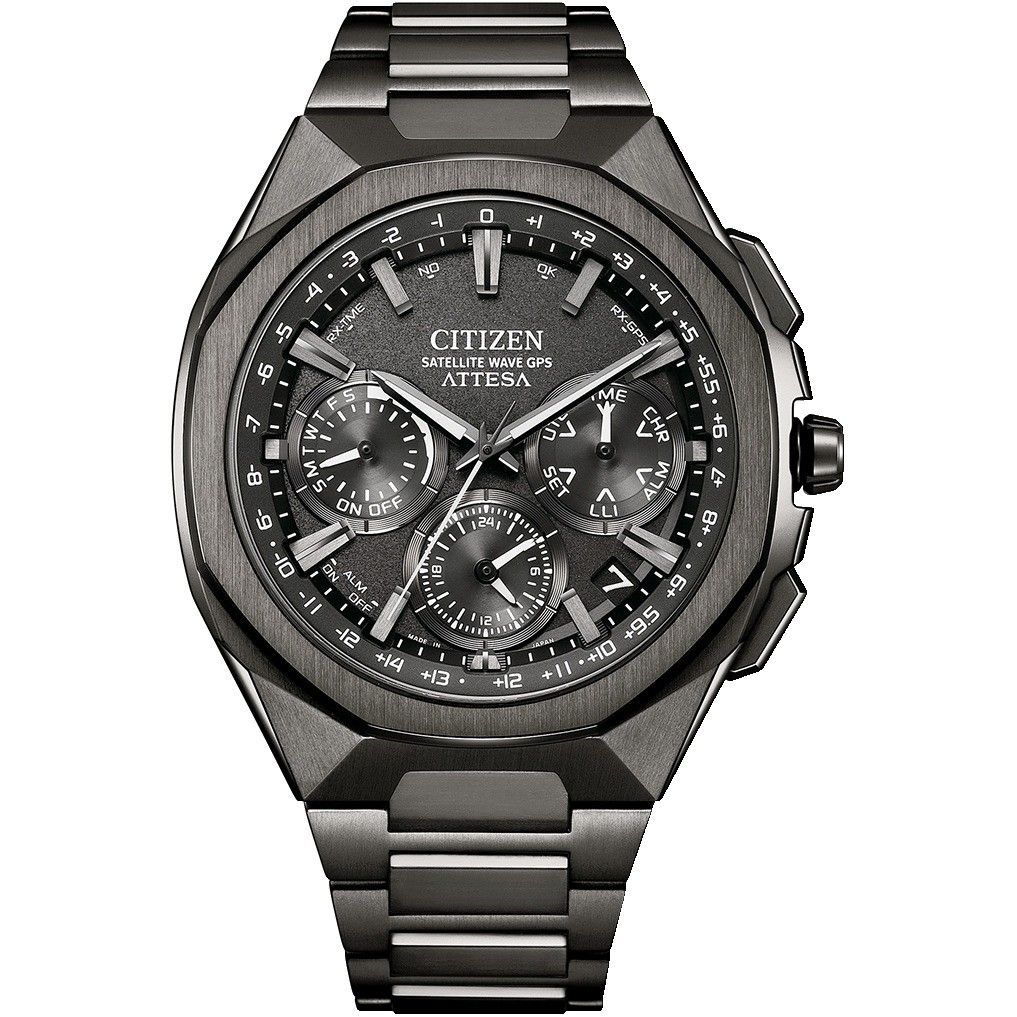
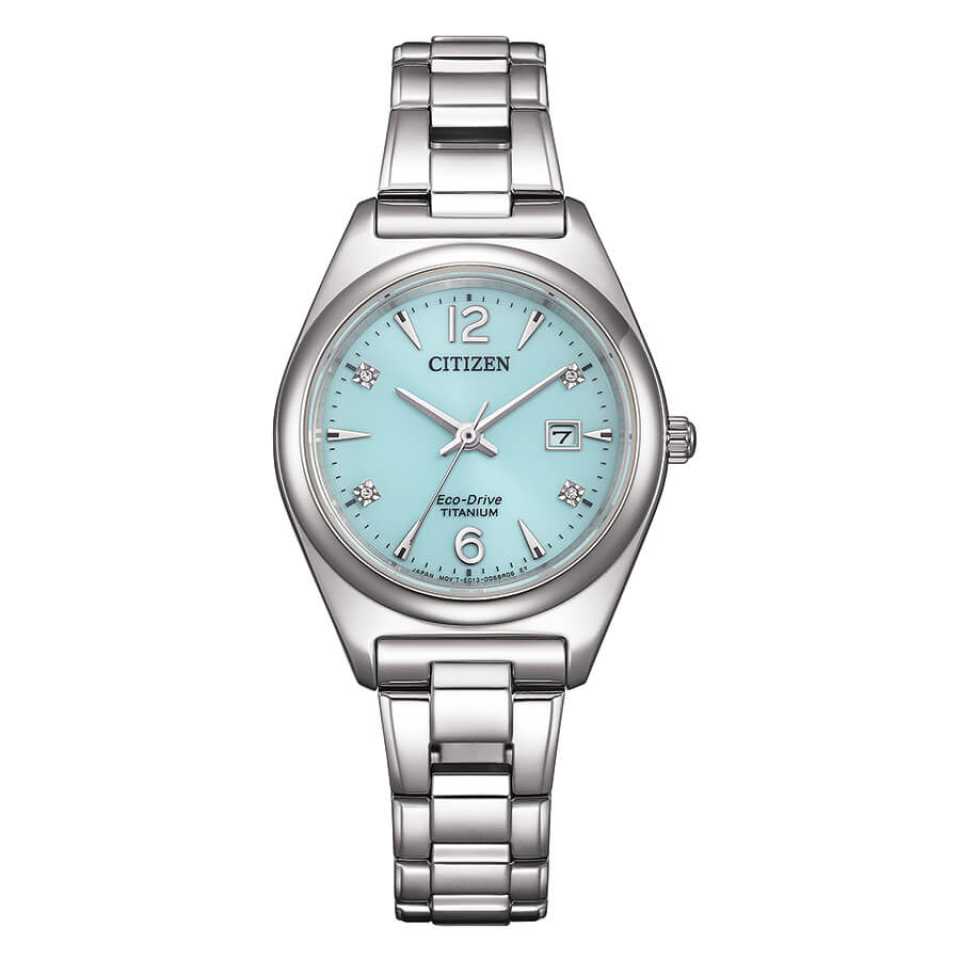
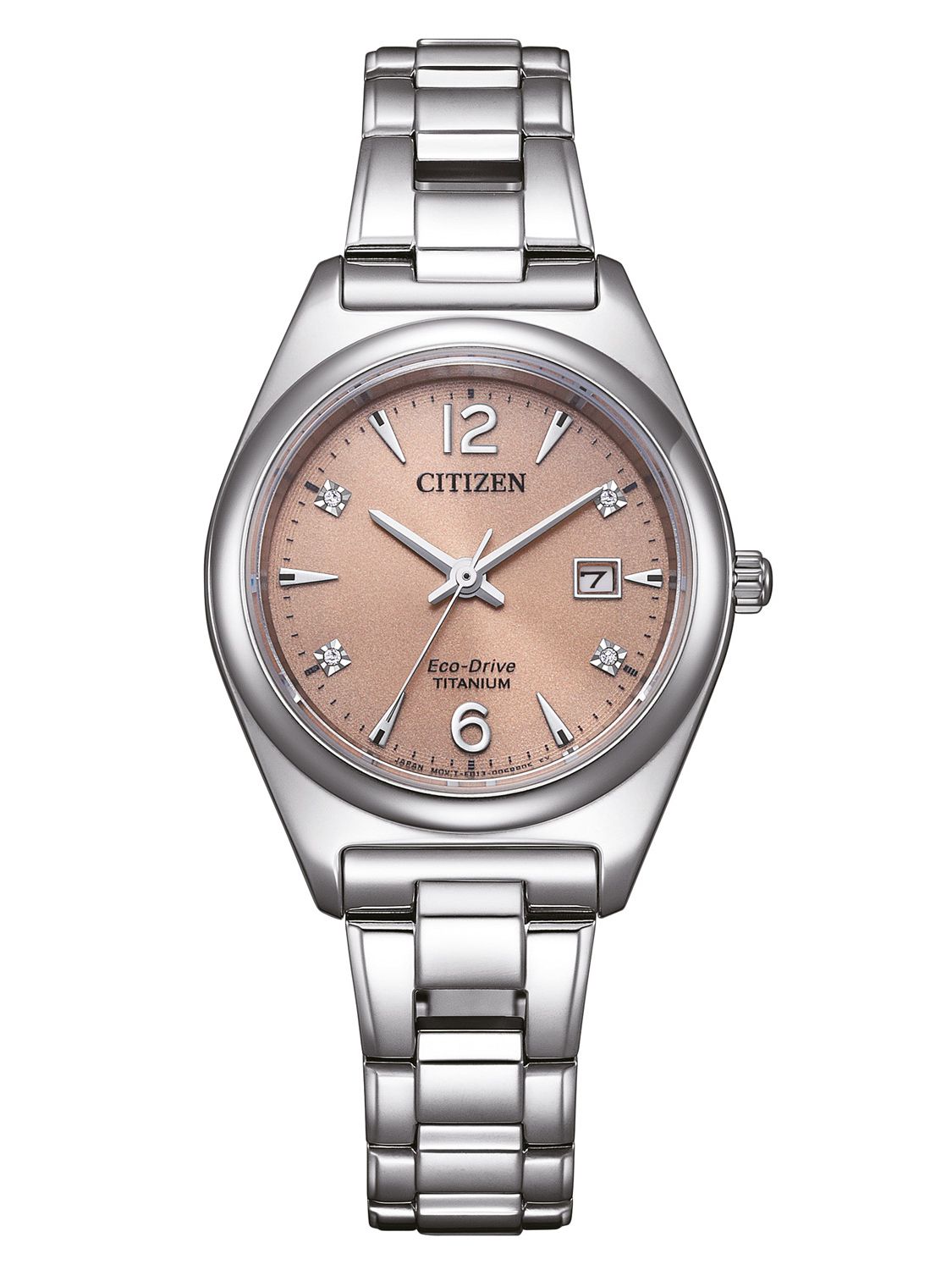
The 27 watches in this category represent a focused edit of the broader watches catalogue. Brands such as Citizen and Casio are well-established in titanium construction — Citizen in particular has used the material extensively across its Eco-Drive solar range, where reduced weight complements the slim movement profiles. Use the filters to narrow by case diameter, movement type, or water-resistance rating to find the piece that fits both wrist and lifestyle.